A finance insights platform that made markets, company reports and money management easy to understand for students and young investors.
It ran for most of 2025 and then closed. This page is the record: what we made, how the team worked, and how it ended.
CHAPTER 01
The spark
Early 2025
School taught us algebra and history. Nobody explained a balance sheet, a mutual fund or what to do with a first income.
Finshub started as a blog to explain those things to people our age, in language a student could follow without a finance degree.
-
MarketsWhat moved this week, and why it mattered to anyone outside Wall Street.
-
Company reportsEarnings and annual reports, cut down to the few numbers that tell the story.
-
Your own moneyBudgets, index funds, SIPs and the checks to run before investing anything.

CHAPTER 02
The blog
Early to mid 2025
Everything began as writing on finshub.com. A piece usually started from a company's own numbers or a moment in market history and ended on what it meant for an ordinary investor. These are some of the pieces we published.

CoreWeave: From Basement Mining Rigs to the AI Cloud Superpower Nobody Saw Coming
From crypto mining to renting GPUs to AI labs.
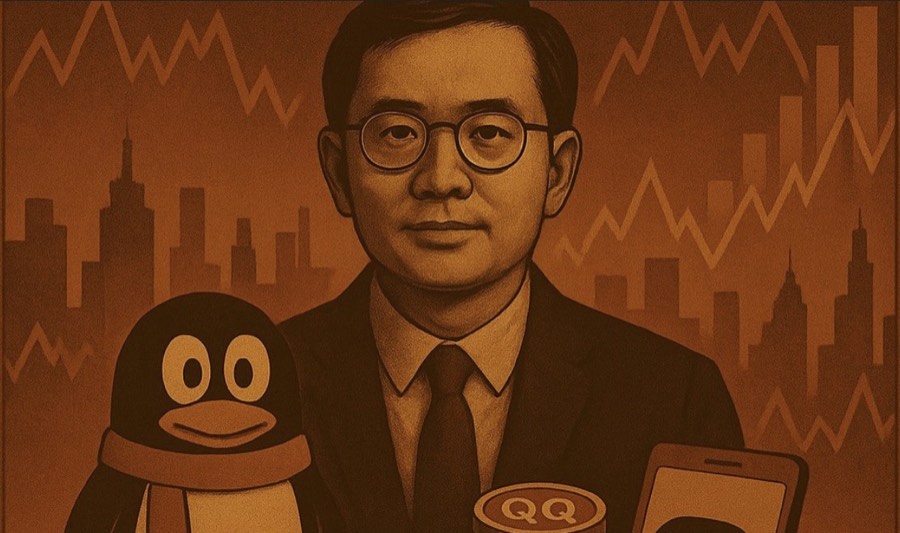
Tencent: From a Penguin to a Digital Empire
How a messaging app with a penguin mascot became one of the largest companies in Asia.
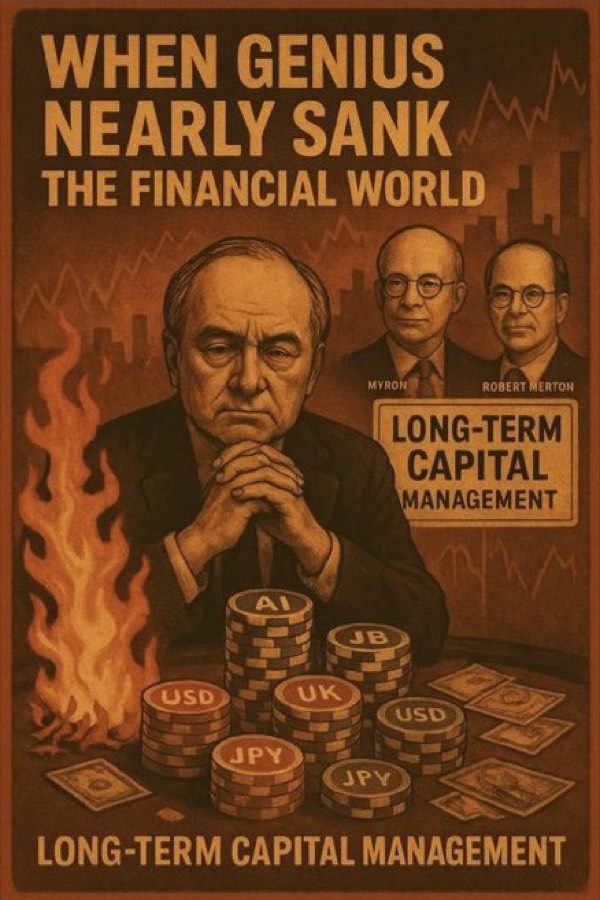
When Genius Nearly Sank the Financial World: The Rise and Fall of LTCM
A hedge fund run by Nobel laureates, and the 1998 bailout it forced.
Results season, every quarter
We tracked major companies as they reported and published breakdowns of the key numbers and what they meant for investors.
Warren Buffett
How he thinks about markets, risk and owning businesses for decades.

Peter Thiel
Contrarian bets, and what he believes about building companies.
CHAPTER 03
Going multiplatform
Mid 2025
Long articles mostly reach people who already read long articles. So we took the research to where students actually were: YouTube Shorts, Instagram Reels and LinkedIn.
The team researched and wrote every piece. To turn selected articles into short explainers quickly, we used AI video tools, mainly Pictory and InVideo AI.
From one article to three platforms
- 1Research and writeA blog article built on filings, earnings and market history.
- 2Cut a scriptThe one idea that survives 60 seconds, plus a hook.
- 3Make the videoScript into an AI video tool, then edit and add the Finshub mark.
- 4PublishSame research, sized for each platform.
Eight shorts worth watching
When Genius Failed: The Collapse of LTCM
CoreWeave: From Crypto Mining to AI Cloud Giant
Tencent's Rise: From Penguin to Digital Empire
How Peter Thiel Made Billions Betting Against Everyone
What Do Private Equity Firms Actually Do?
What VC Firms Actually Do
Palantir Explained
Global Internship for Students: Work Like a Co-Founder
Videos load only when you press play.
On Instagram and LinkedIn
Tencent reel
CoreWeave reel
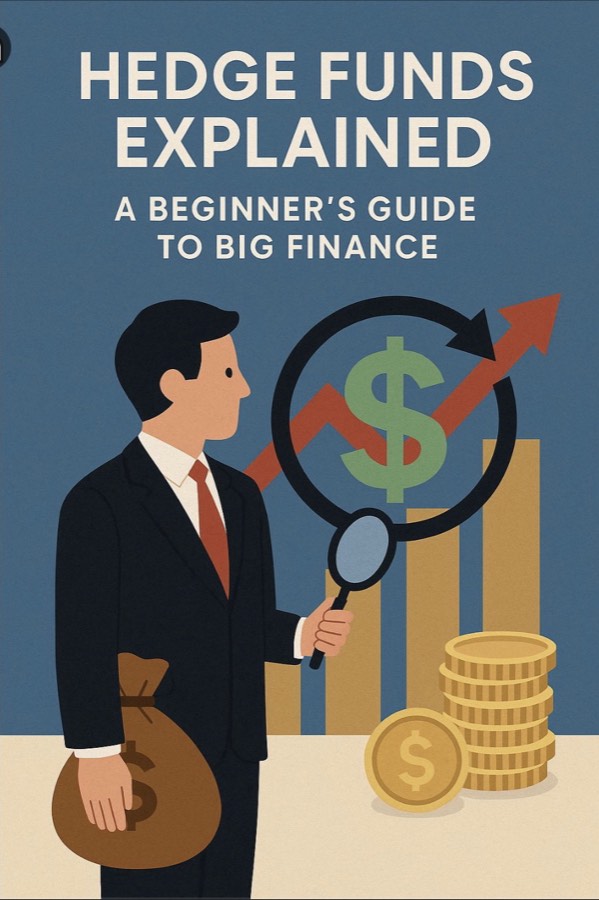
Hedge Funds Explained, a LinkedIn post
The LTCM article, shared on LinkedIn
Every series we ran on YouTube
Market history
Investing and venture
Company stories
CHAPTER 04
Building the team
Mid to late 2025
By mid 2025 there was more to research than the founding team could write. We opened a remote internship for high school students and recruited the same way we published: posts on LinkedIn and Instagram, and a reel on GrowTalks.
The posts that found them
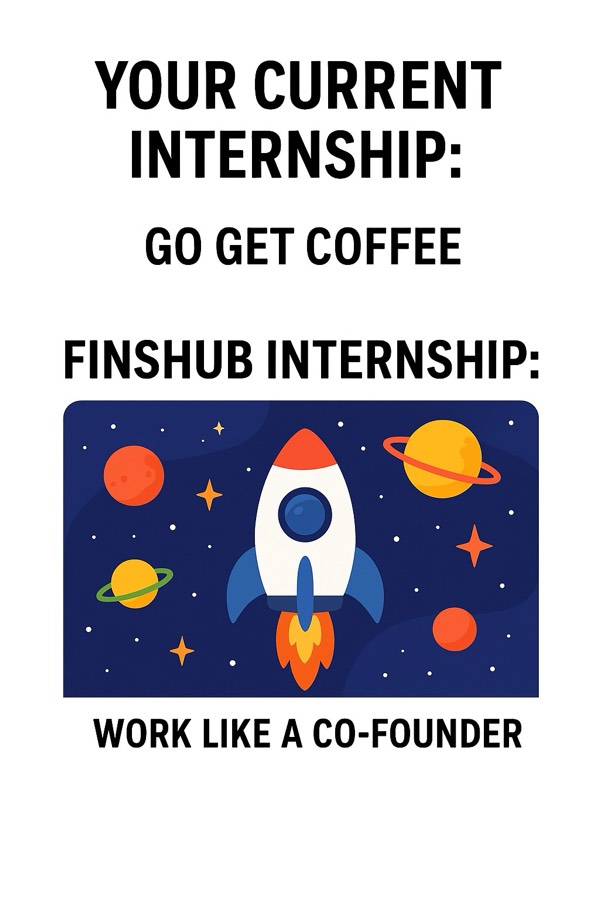
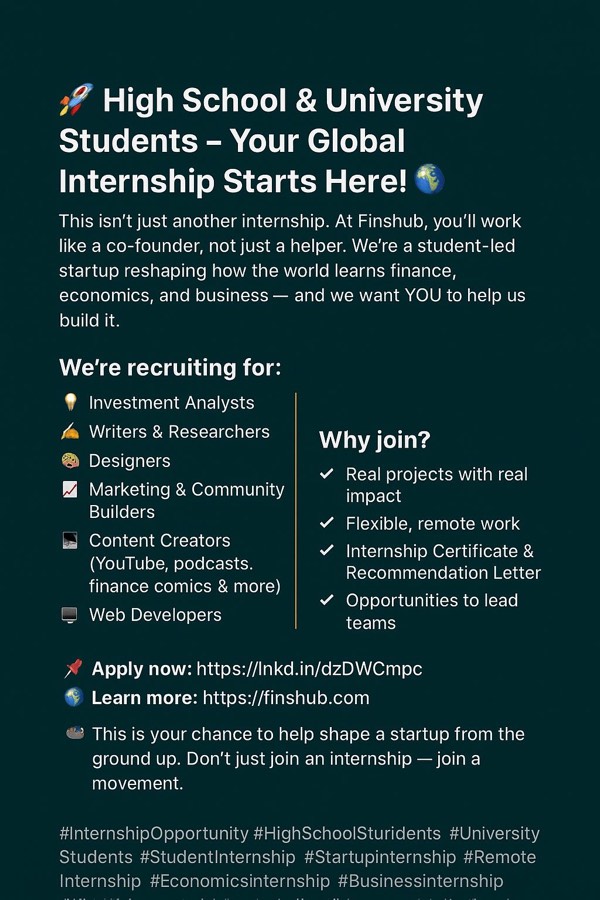
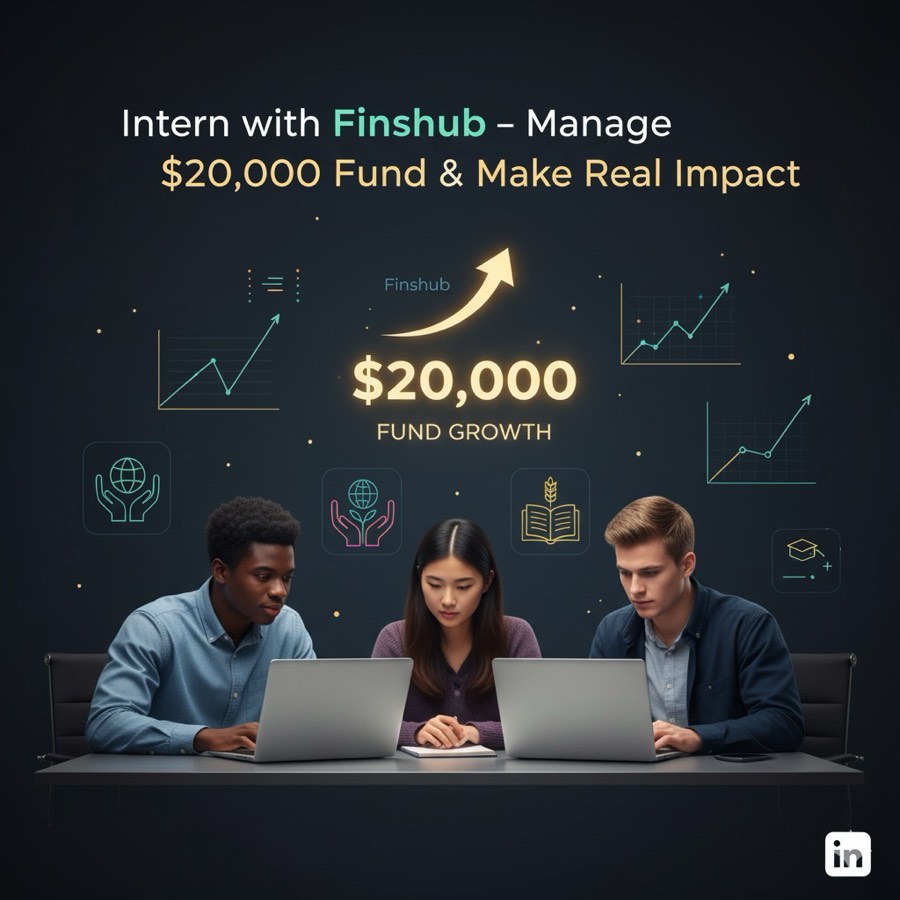

High schoolers: intern with Finshub
If you're seeing this, we need you
Anuj's GrowTalks reel recruiting interns
Where applications came from
12countries
- India
- Indonesia
- Egypt
- Nigeria
- United States
- United Kingdom
- Malaysia
- Czechia
- Kazakhstan
- Uzbekistan
- Peru
- Bolivia
Counted from the application form. Applicants chose a role: financial analysis, economic research, or content and research. More than 30 interns joined.
From a post to a first deliverable
- 1See a postLinkedIn, Instagram or the GrowTalks reel.
- 2ApplyRole, interests, country and why Finshub.
- 3Offer letterRole, reporting line, remote and part time.
- 4Join SlackWhere tasks, feedback and deadlines lived.
- 5Role briefWhat to deliver and how often.
- 6Training plan12 weeks, self paced, free resources.
- 7First pieceA proposal, a market summary or an article.
Two tracks
Equity research, an investment proposal every 3 weeks, financial models (DCF, comparables, multiples) and weekly market summaries on rotation.
Finance writing, economic research reports and video content, including turning articles into videos with AI tools.
The 12 week analyst training plan
Every intern worked through a structured plan before and alongside real work. Pick a phase.
Money, markets and the three financial statements.
Budgeting, saving, assets and liabilities, compound interest.
Task: build a personal budget in Excel and model 10 years of compound interest.
Stocks, bonds, mutual funds, risk against reward.
Task: pitch 3 companies whose products you use every day.
Income statement, balance sheet, cash flow.
Task: pull two annual reports and find the key line items.
Reading a company the way an analyst does.
ROE, margins, liquidity, leverage, P/E and EV/EBITDA.
Task: compare 3 companies in one industry on their ratios.
Business models, competitive position, management, SWOT.
Task: analyse the tech sector and one company in it.
Intrinsic against relative value, trading multiples, the idea of DCF.
Task: build a comparables table for 5 retailers.
Building models in Excel.
NPV, IRR, scenarios, charts.
Task: a three statement model with basic forecasts.
Free cash flow, WACC, terminal value, sensitivity tables.
Task: a full DCF with 5 year projections for a listed company.
Sum of the parts, multiple changes, stress tests.
Task: value one company three ways and reconcile them.
Writing it up and defending it.
Thesis, risks, price target, buy, hold or sell.
Task: a 10 page report on a mid cap with a 12 month target.
Indicators, rates and inflation, sector rotation.
Task: a two paragraph weekly market report.
Diversification, allocation, measuring performance.
Final: a complete investment proposal with model, risks and portfolio fit.
Economic research and content interns had their own self paced plans, covering macro data, central bank releases, research writing, SEO and AI video tools.
CHAPTER 05
How the work ran
Every week, from onboarding to close
Nobody was in the same room, or often the same time zone, so the schedule did the managing. Each analyst owed a full proposal every three weeks, took a turn on the weekly market summary, and came to a monthly team meeting.
A typical nine weeks for three analysts
| W1 | W2 | W3 | W4 | W5 | W6 | W7 | W8 | W9 | |
|---|---|---|---|---|---|---|---|---|---|
| Investment proposal | Due | Due | Due | ||||||
| Weekly market summary | A | B | C | A | B | C | A | B | C |
| Team meeting | Meet | Meet |
What a Finshub report looked like
Research went out in one fixed shape, taken from our editorial template, so a reader always knew where the conclusion was. Open any section to see what it had to contain.
Team leaders, chosen through an application and an interview, reviewed deliverables and kept deadlines. Interns kept the right to show their published work in their own portfolios.
 Economic research
Weekly brief or 3 week report
01Executive summary150 to 200 words
One sentence key insight, the market impact, and a clear bottom line for students.
02Introduction200 to 300 words
The event that prompted the piece, why it matters to young readers, and the scope.
03Key findings and analysis400 to 600 words
The data, the trend it shows, and how it compares with history or other countries. One or two charts, sourced from bodies such as the IMF, the Fed or the World Bank.
04Market and sector impact300 to 400 words
Effects on equities, bonds, currencies and commodities, which sectors gain, which come under pressure.
05Implications for students200 to 300 words
What it means for careers, for the skills worth learning, and for a first investment.
06Conclusion and outlook150 to 200 words
The main insight restated once, and what to watch in the coming weeks.
07Sourceslinked
Primary sources first, then data platforms such as FRED, then news coverage.
CHAPTER 06
The fund
Second half of 2025
Proposals were meant to be acted on, not just published. Interns pitched public equities through their proposals to a student run investment fund of USD 20,000.
How an idea became a position
What every proposal had to cover
- Title and hook
- Executive summary and rating
- Business overview
- Industry and market
- Financial analysis
- Valuation and price target
- Risks and mitigants
- Sources and disclosure
From "How to Write a Publishable Investment Proposal", the guide every analyst was given.
CHAPTER 07
The merger
Mid 2025
Two other student projects were explaining money to the same audience, one on YouTube and one through memes on Instagram. Rather than compete for the same viewers, we joined up, and a third initiative worked with us as a partner.
A YouTube channel on business, marketing and money, led by Anuj Agrawal.
Channel on YouTubeA finance meme page on Instagram that made savings, credit cards and markets shareable, curated by Shourya Agrawal.
A financial literacy initiative that worked with Finshub as a collaborator.
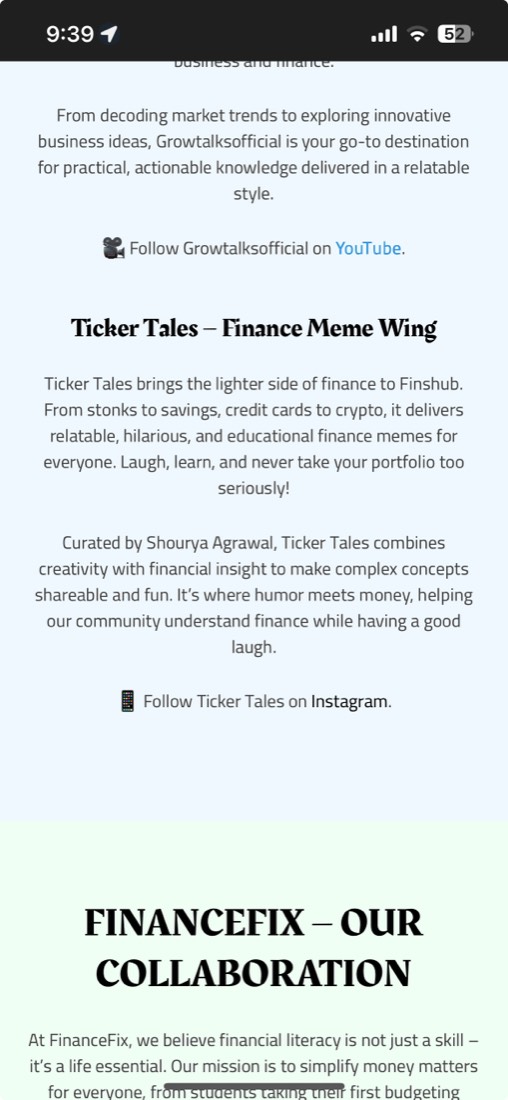
The GrowTalks Official x Finshub collab
"Internship chahiye?" GrowTalks recruiting for Finshub
GrowTalks business shorts
CHAPTER 08
The journey
2025, start to finish
Less than a year from the first article to the last post.
- Early 2025The blog goes live
finshub.com publishes market news, company breakdowns and money basics.
- Spring 2025First YouTube short
"What they don't teach in school", made with an AI video tool.
- Mid 2025Three platforms
Shorts, reels and LinkedIn posts built from the blog's research.
- Mid 2025First interns, then the merger
Content interns join. GrowTalks Official and Ticker Tales become part of Finshub.
- Late summer 2025Global recruitment
Applications from 12 countries. 30+ interns across two tracks, on a 12 week plan.
- Autumn 2025Team leaders and the fund
Leaders for the analyst team. Proposals pitched to the USD 20,000 student fund.
- Late 2025Finshub closes
For personal reasons. The channels stay up.
CHAPTER 09
What happened
Late 2025
Finshub closed in late 2025 for personal reasons. The website went offline. Most of what we made did not.
Where the work lives now
- finshub.comThe original blog and siteOffline
- YouTubeAll 28 Finshub shortsOnline
- InstagramReels, posts and recruitment creativesOnline
- LinkedInArticles and posts, also kept as reposts on Shivam's profileOnline
- This pageRebuilt in 2026 from what survivedOnline
What I carried forward
Interns in a dozen countries can't wait for a reply. Every role needed a written brief, a training plan and a template, and the team only moved as fast as those documents were clear.
A proposal every three weeks and a summary every week produced more than occasional big pushes ever did.
Writing the article was one part. Turning it into a short, a reel and a post that someone would stop for was a second, separate skill.
CHAPTER 10
Team and links
- SAShivam AgrawalFounder and Executive Lead
- AAAbhigyan AgrawalFounding Partner and Content Lead
- AAAnuj AgrawalHead of Media and Marketing
- SAShourya AgrawalTicker Tales
Shivam founded Finshub and ran it day to day. Offer letters went out in his name, and interns reported to him and to Abhigyan, who led content. Anuj led media and marketing, and Shourya brought Ticker Tales with him.